
Wondering if you need flood insurance for your Michigan home? Talk to a Michigan home insurance agent →
Your homeowners insurance covers a lot. Fire, theft, wind damage, a tree through the roof — all covered. Flood damage? Not a single dollar. Standard homeowners policies explicitly exclude flooding, and that gap catches Michigan homeowners off guard every single year.
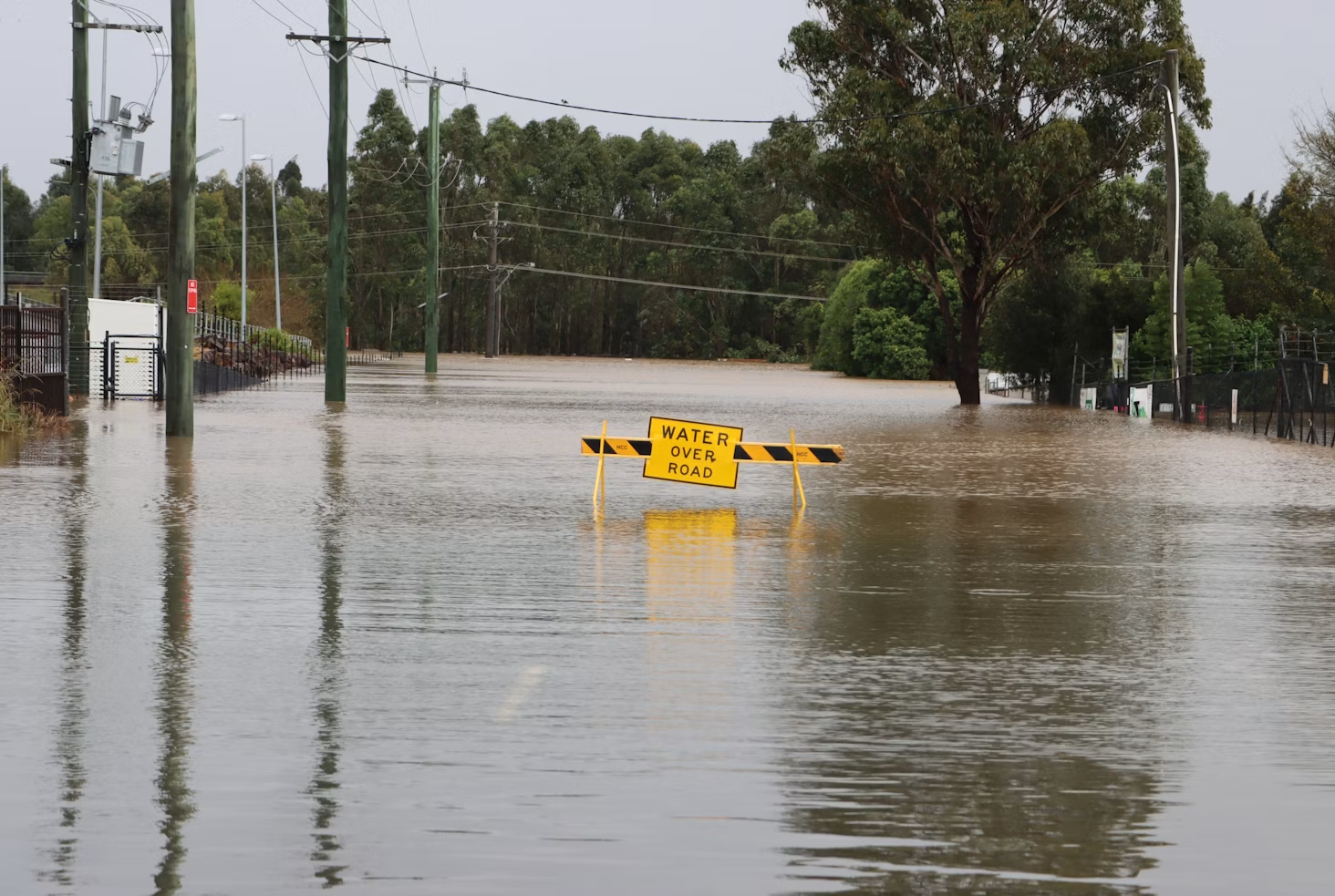
Important: FEMA reports that more than 20% of all flood insurance claims come from properties outside designated high-risk flood zones. You don't have to live near a river or lake to flood. Heavy rain, overwhelmed storm drains, and melting snow can flood any home — and none of it is covered by your standard policy.
Why Michigan's Flood Risk Is Growing
Michigan isn't Florida or Louisiana, but flooding is a real and increasing risk here. A few things have changed in recent years that every Michigan homeowner should understand:
Heavier rainfall events. Michigan has seen a measurable increase in high-intensity rainfall — the kind that dumps several inches in a few hours and overwhelms drainage systems that weren't built for that volume. Southeast Michigan in particular has experienced repeated flooding events in neighborhoods that had never flooded before.
Updated FEMA flood maps. FEMA periodically revises its flood maps to reflect new data on terrain, development, and weather patterns. Properties that were previously outside a Special Flood Hazard Area (SFHA) have been reclassified into higher-risk zones. If your map has been updated recently, your flood risk designation may have changed without you knowing it.
Aging infrastructure. Many Michigan municipalities have storm sewer systems built decades ago, not designed for the rainfall intensities now occurring. When those systems back up, the water has to go somewhere — and for many homeowners, that somewhere is the basement.
Snowmelt combined with rain. Michigan's spring thaw can create significant surface flooding when heavy rain hits before frozen ground has had time to absorb moisture. This combination is a recurring source of flood claims in our region.
What Your Homeowners Policy Does and Doesn't Cover
This is the part that trips people up. Homeowners policies cover some water damage but explicitly exclude others.
What homeowners insurance typically covers:
- A pipe bursting inside your home
- An appliance malfunction that causes water damage (washing machine hose, water heater)
- Rain coming in through a storm-damaged roof or broken window
- Accidental overflow from a bathtub or sink
What homeowners insurance does NOT cover:
- Flooding from rising surface water — rivers, lakes, ponds, or overland flow
- Storm surge
- Water backing up through a sewer or drain (unless you have a specific sewer backup endorsement)
- Seepage or water entering through foundation cracks
- Flooding caused by overwhelmed storm drains after heavy rain
Sewer backup is a separate issue. Many Michigan homeowners confuse flood insurance with sewer backup coverage. They're different products. Sewer backup — water coming up through your floor drain or toilet during a heavy rain event — is not covered by standard homeowners insurance or a standard flood policy. It requires its own endorsement, typically available as an add-on to your homeowners policy for a modest premium. If you don't have it, ask us about adding it.
What FEMA Flood Insurance Covers — and Where the Gaps Are
The National Flood Insurance Program (NFIP), administered by FEMA, is the primary flood insurance option for most homeowners. It's available through licensed agents regardless of whether a private insurer will write it. Here's what it covers and where the significant gaps are:
NFIP covers:
- The building structure itself — foundation, walls, floors, built-in appliances, electrical and plumbing systems, HVAC equipment
- Personal contents (clothing, furniture, electronics) — but only if you purchase separate contents coverage
NFIP does NOT cover:
- Finished basements. Flooring, drywall, and personal property stored below ground level are generally excluded — even if you paid to finish the space.
- Temporary living expenses. If your home is uninhabitable after a flood, FEMA flood insurance won't pay for a hotel or rental while repairs happen. Your homeowners policy's loss-of-use coverage also won't apply, since flood is excluded there too.
- Vehicles. Cars, trucks, and other vehicles are not covered. Your auto insurance comprehensive coverage handles vehicle flood damage.
- Decks, patios, pools, hot tubs, and fences. Outdoor structures are generally excluded.
- Sewer backup. Even a flood policy won't cover water that enters through a sewer or drain backup — that's a separate product.
The 30-day waiting period
This is the one that stings. Standard NFIP policies have a 30-day waiting period before coverage takes effect. You can't buy flood insurance on Monday because it's raining and expect to be covered Tuesday. If you don't have it now, you need to get it before you need it — not after a forecast appears on your weather app.
Private Flood Insurance: An Alternative Worth Considering
In recent years, the private flood insurance market in Michigan has grown significantly. Private carriers can sometimes offer:
- Higher coverage limits than NFIP (which caps building coverage at $250,000 and contents at $100,000)
- Coverage for finished basements and temporary living expenses that NFIP excludes
- Shorter waiting periods — some private policies take effect in as little as 10–14 days
- Competitive or lower pricing for lower-risk properties
Whether NFIP or a private carrier is the better fit depends on your property, your location, and your coverage needs. As an independent agency, we can show you both options and walk through the tradeoffs — something a direct NFIP write-through agent can't do.
Do You Need Flood Insurance?
If your home is in a FEMA-designated Special Flood Hazard Area and you have a federally-backed mortgage, flood insurance is required by law — your lender will mandate it. But the more important question is whether you should have it even if it's not required.
Consider these questions:
- Does your yard slope toward your home or sit in a low area?
- Is there a pond, creek, or drain nearby that backs up during heavy rain?
- Have neighbors experienced basement flooding in recent years?
- Is your home in an area with aging storm sewer infrastructure?
- Do you have a finished basement with valuable contents?
If you answered yes to any of these, flood insurance is worth a serious conversation. The average NFIP claim nationwide is over $50,000. For most homeowners, the annual premium is a fraction of that.
Frequently Asked Questions
Does my homeowners insurance cover basement flooding?
It depends on the cause. If a pipe burst inside your home, yes. If water entered from outside — rising groundwater, overland flow, an overwhelmed storm drain — no. Standard homeowners policies exclude flood damage regardless of where it occurs in the home. For water coming up through floor drains or sewers, you need a sewer backup endorsement. For true flood events, you need a separate flood policy.
How much does flood insurance cost in Michigan?
It varies significantly based on your property's flood zone designation, elevation, and coverage limits. Properties in low-to-moderate risk zones can often get NFIP coverage for a few hundred dollars per year. High-risk zones cost more. Private flood insurance pricing varies by carrier and property characteristics. The only way to get an accurate number is to get a quote — which we can do for you.
I'm not in a flood zone. Do I still need flood insurance?
Flood zones describe statistical risk levels, not absolute guarantees. More than 20% of FEMA flood claims come from properties outside high-risk zones. Michigan's increasing rainfall intensity means areas that never flooded historically are now experiencing water intrusion. Being outside a Special Flood Hazard Area reduces your risk — it doesn't eliminate it. And if you're in a lower-risk zone, flood insurance premiums are typically much more affordable.
What's the difference between flood insurance and sewer backup coverage?
Flood insurance covers water that enters your home from an external flooding event — rising surface water, overland flow, storm surge. Sewer backup coverage handles water that enters through your plumbing system — floor drains, toilets, or sinks — typically when the municipal sewer system is overwhelmed during heavy rain. They're different causes, different products. Many Michigan homeowners need both. Sewer backup coverage is typically an affordable endorsement on your homeowners policy.
Can I buy flood insurance right before a storm?
No — and this is one of the most important things to understand. Standard NFIP flood policies have a 30-day waiting period before coverage activates. Some private flood carriers offer shorter waiting periods of 10–14 days, but you still cannot buy coverage when a storm is already threatening. Flood insurance only works if you have it before you need it. Don't wait for a forecast to start the conversation.